Acknowledge what’s changing.
Start from there.
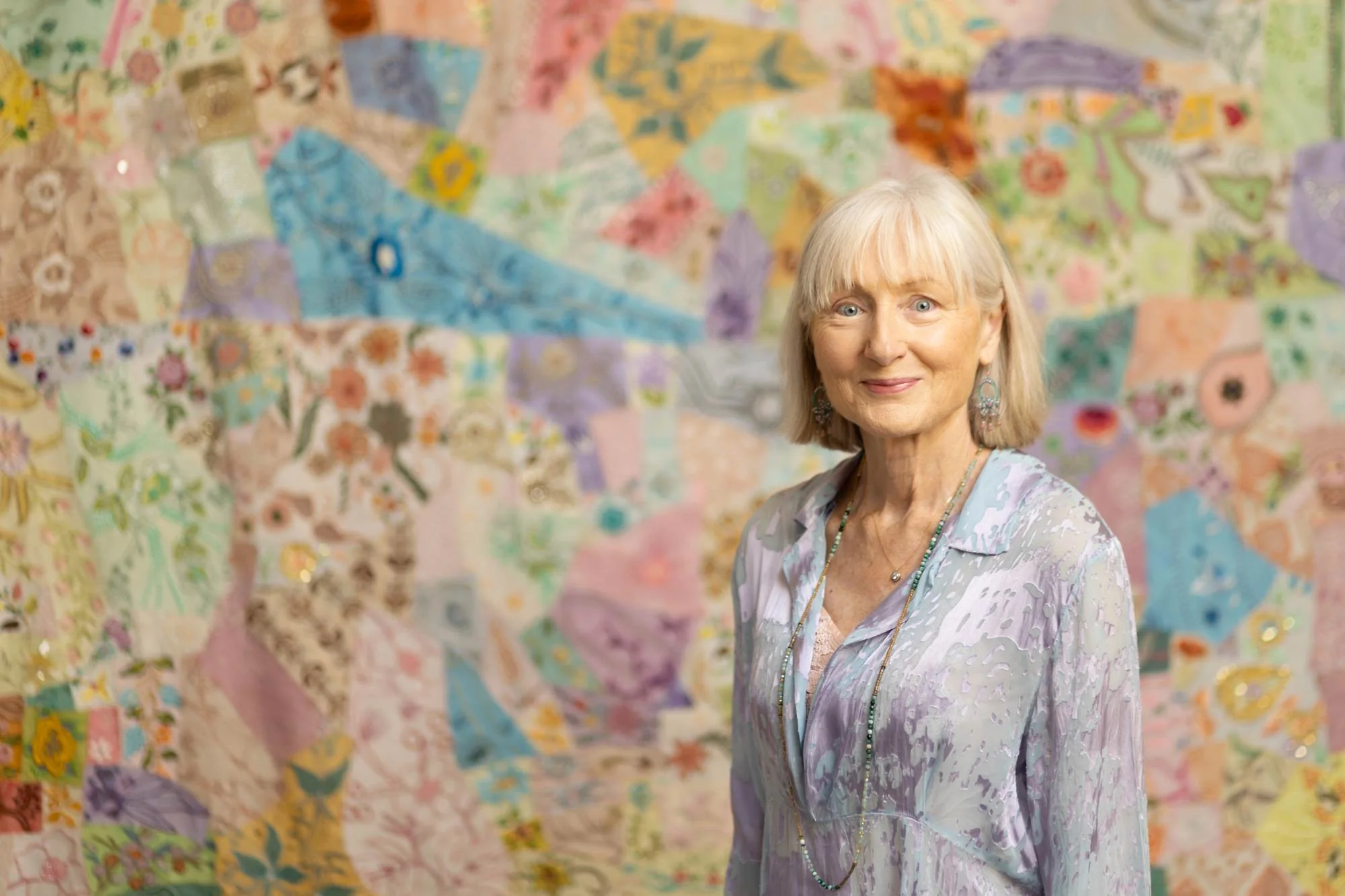
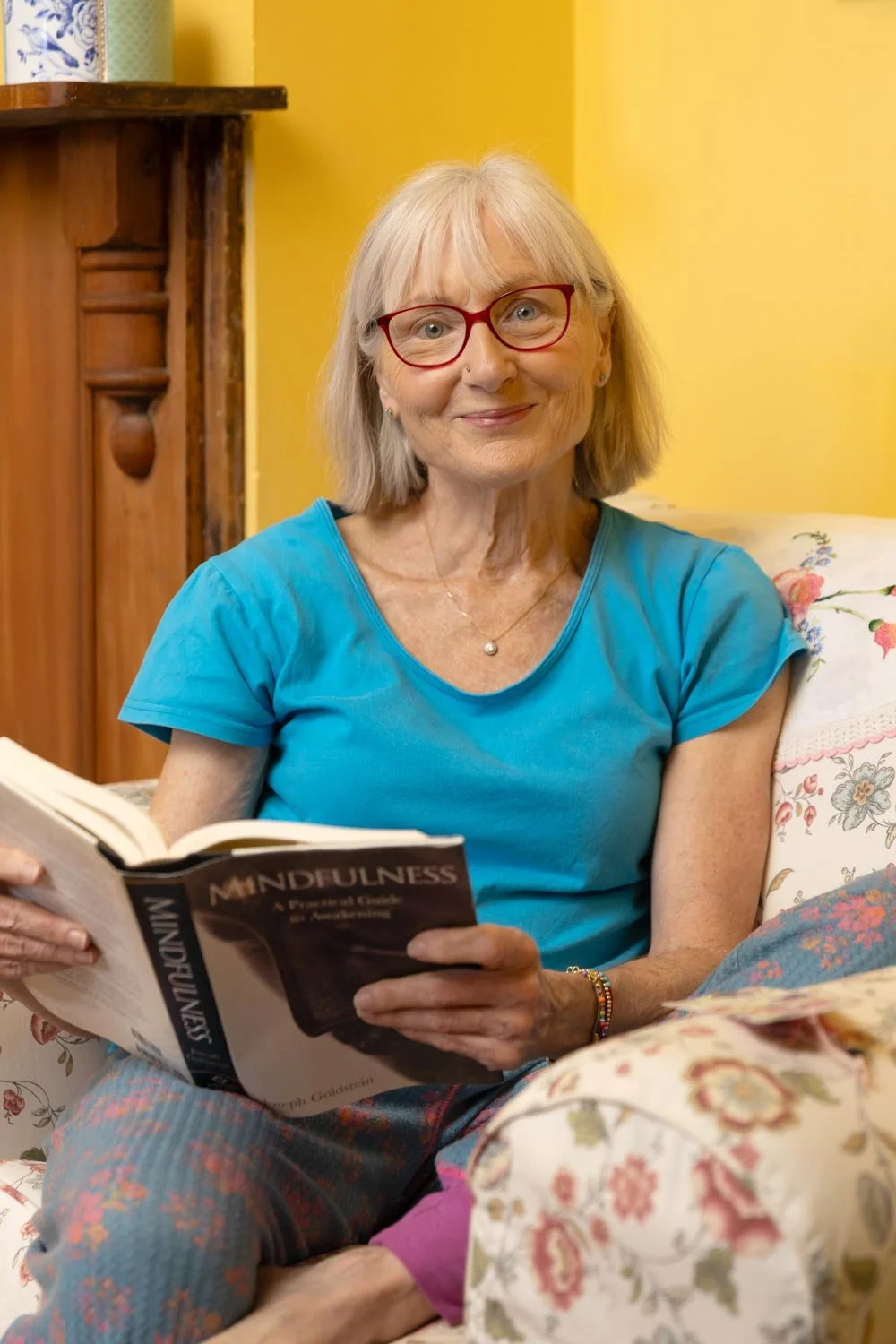
Hello, I’m Penelope. I’m a clinical psychologist, fitness trainer, and mindfulness teacher. For many years, I have helped women listen to their bodies, manage difficult emotions, and feel comfortable being themselves. I believe in bringing body, mind, heart, and soul together.
During those years, I often ignored my own body’s signals and pushed through pain. I thought building strength might keep me from ageing. Even though I knew better, I still acted that way.
One morning, my body made it clear I needed to pay attention. I had been teaching these skills for 38 years, but I had stopped using them myself.
Now, I help women over 60 find ways to age that work with their bodies instead of against them.
That means less unnecessary struggle with things like emotional ups and downs, mental fog, big questions, energetic grandchildren, and even those tricky stairs that no one warned us about.
Your wake-up call.
For some, it’s physical, a diagnosis, a fall, a morning when getting out of bed feels impossible. For others, it’s quieter—like looking in the mirror and thinking, 'When did I get so old?'
No matter what, you know something needs to change. You value your independence and want to keep it. You’re tired of all the talk about ageing, from the 'turn back the clock' advice to the constant push for positivity.
You want real answers that work in daily life. And a way forward built around what actually matters to you now, not a script written for who you used to be.
That’s exactly what I help with.

I’d like to introduce my signature Whole Strength method
With over 38 years in clinical psychology, body and brain fitness, and mindfulness teaching, alongside my own real experience of loss, ageing, and rebuilding, I created Whole Strength. It works with your body, mind, heart, and soul together, through four stages, helping you meet your own natural changes honestly, instead of fighting them.
NOTICE IT
You can only change what you're actually willing to see. This first stage uses body awareness and mindfulness to help you notice what's really happening: in your body, your relationships, and in your life. Simple, practical tools help you see what’s happening, before the old patterns take over.
OPEN TO IT
This stage is built on self-compassion. Once you can see clearly, you let yourself actually feel what's there, not just what you've lost, but what you're discovering alongside it. Being genuinely kind to yourself here is what stops you fighting your own feelings, and makes room for what comes next.
REBUILD
This is where body, mind, heart, and soul start working together. Real physical strength, built through movement that respects where your body actually is. Real resilience, in how you think and feel under pressure. And real direction, from your values and strengths. This helps you make choices from what actually matters to you.
LIVE IT DAILY
This is what carries everything you've built into your life, even on the days it feels out of reach. Old fears will resurface sometimes. You'll fall back into old habits occasionally. Living it daily means noticing when you've drifted, and finding your way back to what matters, again and again, drawing on everything the Whole Strength method has built in you.
Here’s what changes
You're no longer at war with your body, your age, or yourself, and that changes everything.
You can grieve what's gone and discover what's becoming.
You know your own worth, not because you've earned it, but because you've stopped trying to prove it.
You feel alive, not just getting by, because that's what Whole Strength is about.
This is the work I do with every woman who reaches that crossroads, wondering if there's another way.
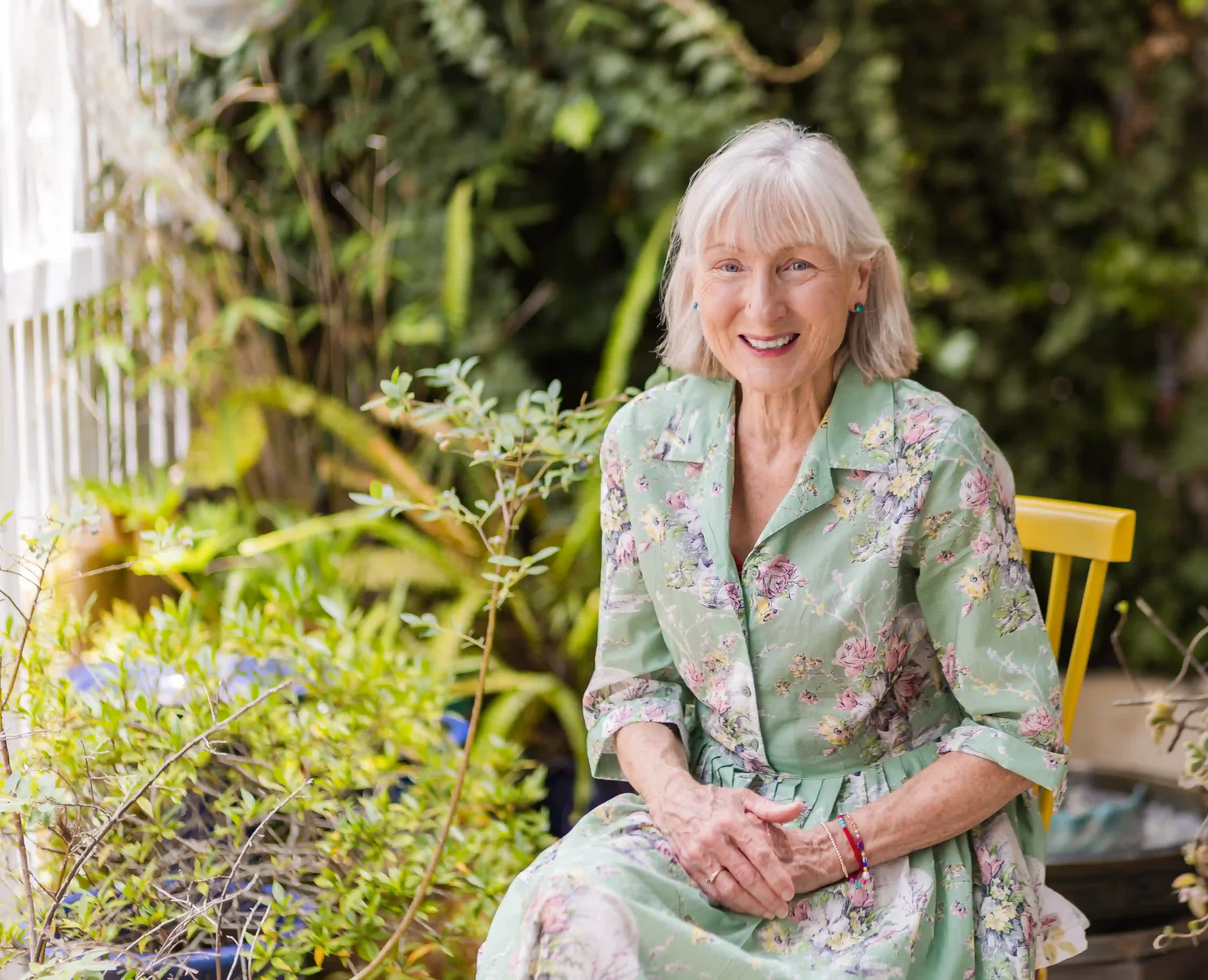
My story:
The long way home
When I was growing up, people didn’t see me as fit. I didn’t stick with exercise, and most of the time, I just avoided it.
Getting pregnant at 30 changed everything for me. I began to focus on what really mattered. Fitness, therapy, mindfulness, and self-compassion all made a difference. For once, my stubbornness worked in my favour.
Later, I joined a boot camp in Perth led by a former SAS soldier. The training was hard, but it made a real difference. I eventually joined the elite squad and kept pushing myself. When I turned 61, I ran my first half-marathon.
By then, I had spent over 30 years working as a clinical psychologist, fitness trainer, and mindfulness teacher. I understood the mind-body connection in my work and thought I was living it myself.
At least, that’s what I believed, until things changed even more.
After I turned 60 and started my online business, I got too busy. My strengths became weaknesses, I overtrained, let my healthy habits slide, and stopped listening to my body altogether.
Eventually, my body caught up with me.
The day my body called my bluff
Wake-up calls never give you a warning. They just arrive and demand your attention, even if you’re still in your nightie with your hair sticking up like a cockatoo.
Mine came on a regular January morning. I felt a sharp pain in my lower back that shot down my left leg.
I tend to be stoic, so I did what any stubborn, slightly unrealistic woman might do. I pushed through and taught my class, telling myself it was just "a bit of tightness."
The reality check
But things weren’t okay. A few hours later, I couldn’t get off the couch. The scans showed two disc bulges, osteoarthritis, and years of bone loss. My back was finally giving out after years of denial.
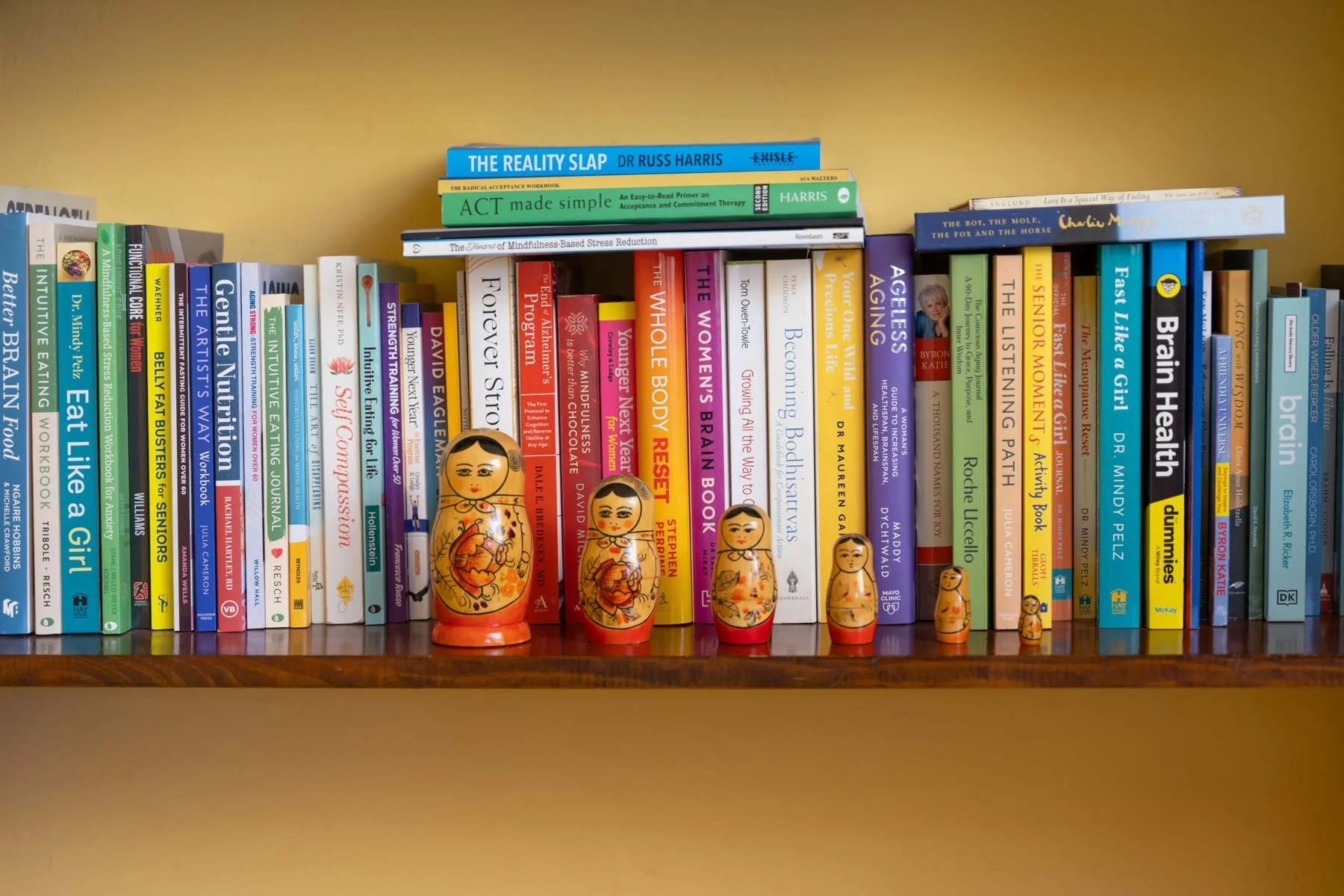
The irony struck me. I’m a psychologist, a fitness trainer, and a mindfulness teacher. I know about the body-mind connection, but I ignored my own advice.
When moving hurts too much, you can’t pretend anymore. I finally faced what I’d been avoiding: my actual limits, how long I'd been ignoring my own advice, and that I couldn't just push through this one.
The choice:
Pushing through or healing
I could keep doing what I'd always done: ignoring the pain, keeping up appearances, and hoping I'd get back to "normal."
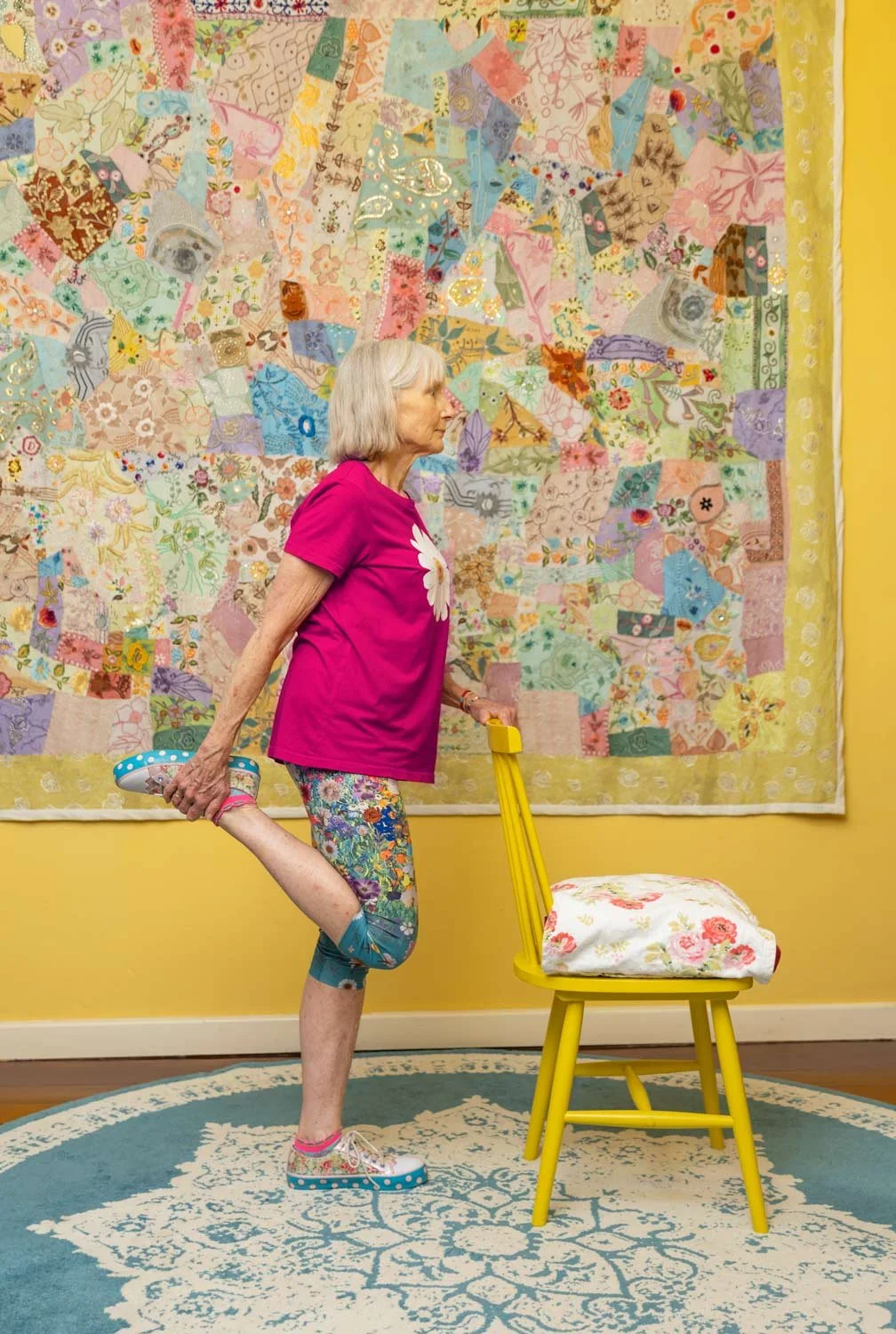
Or I could actually listen to my body and do things differently. I chose to stop, listen, and work with what was actually true, instead of forcing my way through.
If you're ready
I work with women over 60 who have had their own wake-up call. Maybe it was something physical, like a diagnosis, a fall, or the morning you couldn’t get out of bed. Or maybe it was quieter, like looking in the mirror and not recognising yourself. Either way, if that’s you, something needs to change.
I guide and support women to do what I did: acknowledge what they can't change, make space for what's true, and rebuild toward what actually matters.
I teach them Whole Strength, not the kind that acts as armour, but the real kind. The kind that gives you the independence to choose your own path, clarity about what's worth your time and energy, and a life that's actually yours, not just endured.
I do this work because I've been through it myself. And I know this: strength isn't just about what you can carry. It's about what becomes possible for you, once you stop fighting yourself.
Finding my way back home
What saved me wasn't a magic stretch or a better physio. It was going back to what I had stopped doing: the real, sometimes uncomfortable work of bringing together body, mind, heart, and soul.
I rebuilt my physical strength, but this time I did it differently. I focused on strength with awareness, not ego. I practiced brain-body dual-tasking and daily mindfulness. I chose self-compassion over self-criticism.
I learned that my body heals best when my mind isn't fighting it. Self-compassion and mindfulness were what helped me stay steady. Without a sense of meaning, I could look strong on the outside and still feel completely empty.
My back injury wasn’t a disaster. It reminded me that the practices I had stopped, the ones I’d taught for years, weren’t just nice extras. They were survival tools, the difference between just getting by and actually living.
Fun facts about me
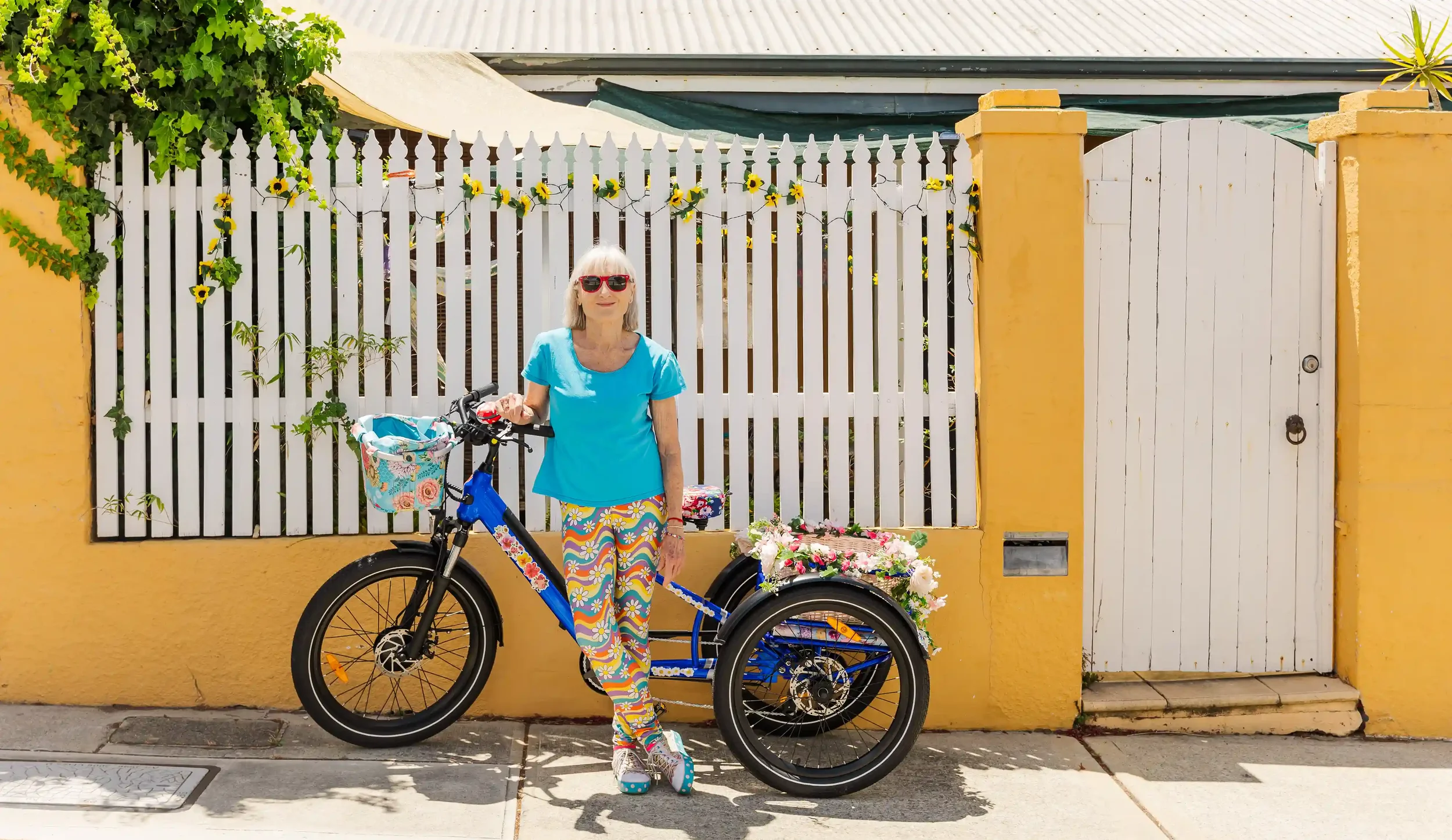
My small rebellion at 68: I've sold my bright yellow Fiat and get around on an electric tricycle instead – adorned with flowers and flower stickers, naturally. I am carrying dumbbells in the back tray for teaching my beach fitness classes.
The most impractical but delightful thing I own: A long sapphire blue velvet theatre coat with gold buttons. Completely impractical for Perth. I refuse to recycle it.
What surprises people most: Even though I'm outgoing and teach fitness classes outside in public, I'm actually a shy introvert. And I'm addicted to BBC crime shows.
My daily pleasure (not guilty at all): Two shortbread fingers. Every single day. Non-negotiable.
The best advice I ever ignored: "Behave yourself and be a good girl."
What surprised me most about getting older: If you put the energy in the right places, it can be the most fabulous, creative, strong, resilient time of your life. Even with a crumbling spine.